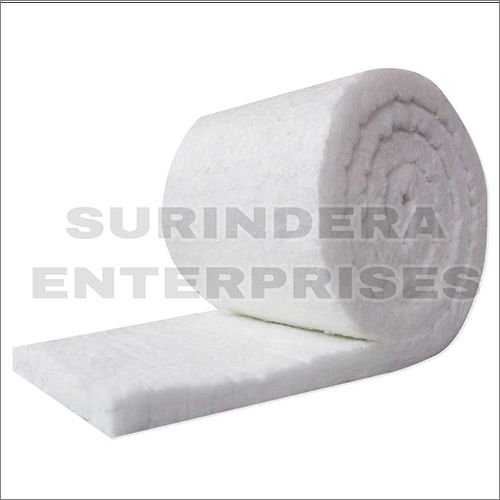
About MORUGUPPA CERAMIC FIBRE BLANKET
We are Surindera Enterprises our portfolio of fibre blankets is used to protect equipment and people, conserve energy, and reduce emissions to deliver a more sustainable operational process in some of the most demanding environments in the world.
Our range comprises of the following fibre grades:
- Superwool Low Biopersistent Fibres (LBP)
- Alkaline Earth Silicate Fibre (AES):
- Superwool Plus classification temperature of 1200C (2192F)
- Superwool Prime classification temperature of 1300C (2372F) - New innovation
- Potassium Alumino Silicate Fibres (PAS)
- Superwool XTRA classification temperature of 1450C (2600F) - non-forming respirable crystalline silica
- Refractory Ceramic Fibres:
- Kaowool classification temperature of 1260C (2300F)
- Cerablanket classification temperature of 1260C (2300F)
- Cerachem classification temperature of 1430C (2600F)
- Polycrystalline Wool Fibres
- Denka and Maftec classification temperature of 1600C (2912F)
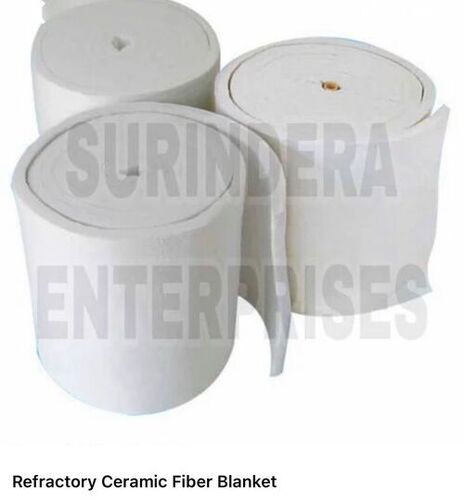
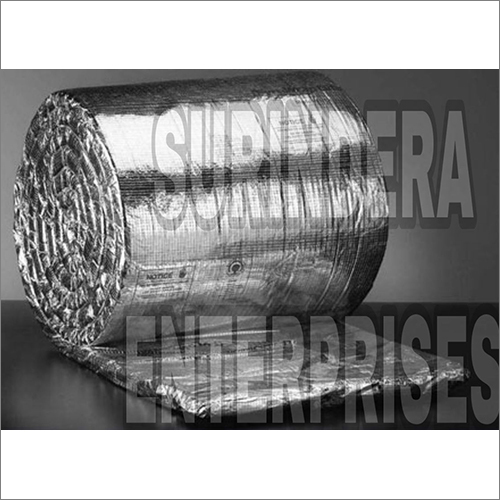
Exceptional Thermal Insulation PerformanceThe MORUGUPPA Ceramic Fibre Blanket offers superb thermal insulation with low thermal conductivity (0.12-0.16 W/mK at 800C) and resiliency, making it ideal for controlling energy loss in high-temperature environments. Its consistent performance ensures optimal efficiency in kilns, furnaces, and industrial processes where stable heat management is crucial.
Versatile Applications Across IndustriesEngineered for demanding environments, this blanket performs exceptionally in a diverse array of industries-including kilns, boilers, glass production, metal works, and petrochemical plants. Its customizable thickness, fire resistance, and high-temperature stability enable tailored solutions for multiple insulation and fire protection needs.
Durability and Safety GuaranteedWith high tensile strength, purity greater than 98%, and no organic binders, the blanket is resistant to fire, moisture (<1%), and chemical attack. Its excellent dimensional stability and soft, resilient form contribute to a safe, reliable, and long-lasting insulation solution. The odorless and smooth white blanket ensures both safety and comfort during installation and use.
FAQ's of MORUGUPPA CERAMIC FIBRE BLANKET:
Q: How is the MORUGUPPA Ceramic Fibre Blanket typically installed in industrial settings?
A: Installation of the MORUGUPPA Ceramic Fibre Blanket involves cutting it to the desired size and mounting it onto surfaces using metallic anchors, adhesives, or mechanical fasteners. Its soft and resilient texture allows easy adaptation to complex shapes, making it suitable for lining kilns, furnaces, and other equipment.
Q: What benefits does this ceramic fibre blanket offer for high-temperature insulation?
A: The blanket provides excellent thermal insulation, reducing heat loss and energy consumption. Its low thermal conductivity, high temperature resistance (up to 1425C), and fire-resistant properties ensure equipment longevity and improved safety in demanding industrial environments.
Q: When should I choose the high-temperature grade (1425C) over the standard grade (1260C)?
A: Opt for the high-temperature grade when your process or equipment involves continuous or peak temperatures exceeding 1260C, such as in certain steel, glass, or petrochemical applications. The higher grade ensures enhanced durability and safety at elevated temperatures.
Q: Where can the MORUGUPPA Ceramic Fibre Blanket be applied most effectively?
A: The blanket is highly effective in kiln lining, furnace insulation, boiler insulation, and equipment in foundries, glass, steel, and petrochemical plants. Its flexibility, fire resistance, and acoustic insulation properties make it a versatile solution for numerous industrial and commercial insulation needs.
Q: What makes this ceramic fibre blanket a safer insulation choice compared to conventional materials?
A: With no organic binders, nil water absorption, excellent fire resistance, and an odorless composition, the blanket minimizes smoke, fumes, and moisture retention. Its chemical purity and durability further contribute to a safer working environment during both installation and operation.
Q: How can customizing the thickness of the blanket improve its performance for my application?
A: Customizing thickness allows you to optimize insulation performance, space usage, and installation efficiency. For higher temperature retention or noise reduction, a thicker blanket may be preferred, while thinner variants can be used where space is limited or for lower insulation requirements.

 Send Inquiry



 Send Inquiry

 Send Inquiry